If you’ve ever marveled at the many. Cats’ flexible spines also allow them to be incredibly fast runners, reaching speeds up to 30 miles per hour.
Understanding How & Why Cats Arch Their Backs PetMag
Cats can rotate their flexible spines much more than other animals.
Why are cats spines so flexible. Why do cats meow at night? A flexible spine also contributes to the speed and grace of cats. Because cats have so many.
Comfort cats are incredibly flexible , and although we may not see this strange imitation of us as comfortable, their spines are very strong and stretchy. In comparison, the cat’s flexible spines make it easier to clean.” Shoulders a human’s shoulder blades helps to form the joint that connects the upper arm to the body.
It allows cats to do graceful and elegant acrobatic feats. “a typical hairbrush has spines that stick straight out. While the spinal bones of all vertebrates are separated by cushioning discs, cats have a little something extra.
Lucky for these crazy critters, their flexible spines allow them to squeeze themselves into the confined spaces, so it’s no big deal for them to cram their furry bodies into a small basket or shoe box. Human spines have between 32 and 34 vertebrae (spinal disks) that are packed relatively close together with little padding. At the root of a cat’s flexibility is its spine.
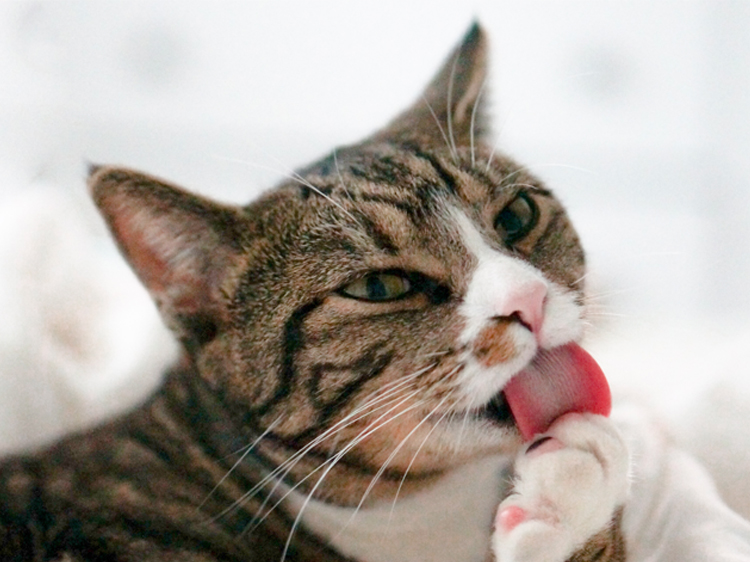
This gives them the ability to run. Cats can twist and turn their bodies and rotate their spine more than practically any other animal because their high number of vertebrae (53 vertebrae as compared to the 33 vertebrae in humans) are flexibly connected with an elastic like cushion on their disks. It may look like she's sitting like a human, when actually the position is giving your cat some easy stomach access for cleaning, since cats are far more flexible than we are.
Why can they do this? All flexibility came from the unique spine structure of the ferret, the ferret spine can spread out when the ferret goes in a pipe or underground. So ferret body shape, and internal skeleton formation makes them extremely flexible and compact.
While all animals' vertebrae has cushioning between the individual disks, a cat’s spine has more elastic cushioning than most mammals. A little bit of detox. Why is a ferret’s spine so flexible?
During hunting, your cat will lengthen their spines by extending and flexing its back. By comparison, a human spine contains 33 vertebrae. Human torsos can only rotate in one direction at a time, at a maximum of 90 degrees.
This gives felines in the wild a big advantage when hunting prey. Thanks to their spine, they don’t lose agility while running in underground tunnels, which makes them so efficient hunters. Including their tails, cats have up to 53 vertebrae.
Their unique spine is an evolutionary adaptation that allowed them to chase rabbits, mice, rats, and other small animals through tight spaces. Cats’ spines are cushioned by elastic discs that divide the many bones that make up the structure. This flexibility allows cats to lengthen their stride by alternately extending and flexing the spine, and every running stride is about three.
Their spines rotate further than other species’ spines, which help them move into unique postures. They can also twist their bodies to a greater degree. Why are cats so flexible?
The freedom in the shoulders allows the animal to also extend their body dramatically at the same time. When hair collects on the brush, it forms a thick mat that must be removed by hand. The muscles that are connected to the spine are done so very flexibly as well, allowing cats to increase their stride by extending the spine.
Cats almost always do land on their feet. Using these discs, cats may effortlessly spin their bodies up to 180 degrees to the left or right, depending on their preference. After being inactive for a while, toxins and waste, such as lactic acid and carbon dioxide, may build up within your cat.
Cats make their living in the wild as predators, and to be successful, they must be quick, powerful, and flexible. From a sitting start, they can spring up to nine times their height, and they can narrow their shoulders and chest to. And their vertebrae have much thicker disks.
Each of the joints in their spines add to their flexibility. “a cat can rotate its body up to 180 degrees,” parker explains. A cat’s spine is much more flexible than that of a dog.
When cats run, their backs contract and extend to give them maximum stride. A cat’s spine can rotate more than the spines of most other animals, and their vertebrae have a special, flexible, elastic cushioning on the disks, which gives it even more flexibility. According to the daily cat, cats do this simply because they can!
Their vertebral bones have increased elasticity in the disc between bones when compared to a dog, which is why cats don’t have the back problems that dogs tend to have. This is because cats’ spines are incredibly flexible—twice as flexible as those of humans, in fact. A cat’s flexible body helps them to stalk, pounce, and catch unsuspecting prey.
Cats are so flexible because of their high number of vertebrae, or individual spinal bone disks. Because they lack a collar bone, they can squeeze themselves into small spaces. The combination of these two abilities is why cats can flex and.
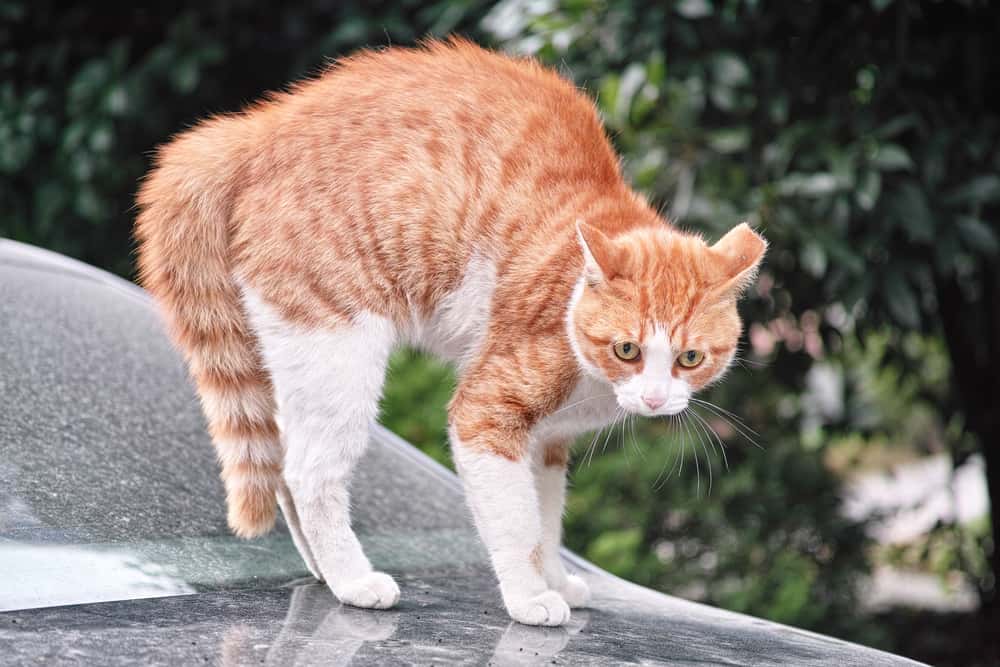
Since cats are natural predators to smaller animals such as birds and mice, their body has adapted in a way to aid in their hunting skills. The flexibility of the spine of the cat enables them to perform a very tight back arch. Cats are so flexible because their shoulder blades are attached to their bodies with muscle, not bone like other species.
Their spines contract to give them longer strides when running, they allow cats to jump higher, they make it easier to make sharp turns when hunting, and they make it possible for cats to realign their bodies when falling.